
First Time in Kolkata? 15 Things You Absolutely Cannot Miss (From a Local)
The non-touristy first-timer's guide to Kolkata — what to actually do, what to eat, what to skip, and how to not waste your first visit to the most misunderstood city in India.
5 June 2026 · Written by a Kolkata local
First-timers come to Kolkata with one of two expectations: either they think it’s going to be chaotic and sad (thanks, City of Joy), or they think it’s a heritage museum full of old buildings.
Both are wrong. Here’s what to actually do.
Day 1 — The Old City
1. Start at College Street at 8 AM
This is the world’s largest second-hand book market, and it’s best before the heat sets in. The pavement stalls stretch for over a kilometre — you can find academic texts, Bengali literature, pulp fiction, old film posters, ancient magazines. Even if you don’t read, the atmosphere of a street that has sold books since the 1800s is worth the trip.
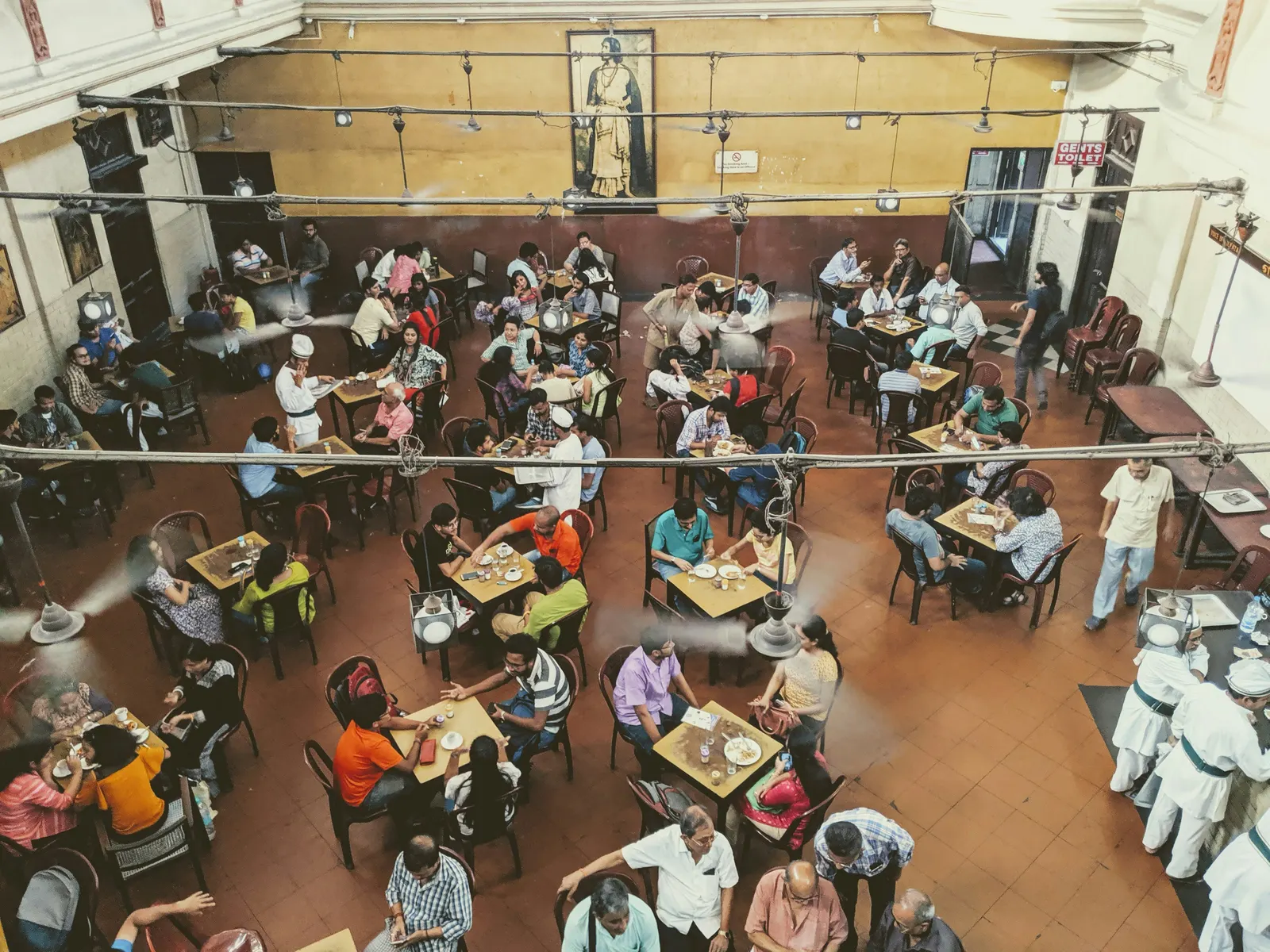
The Coffee House at the end of College Street (Indian Coffee House) has been the intellectual gathering point of Kolkata since 1947. Go in. Order the coffee and the toast. Sit for a while.
2. Kumartuli — The Clay Gods Neighbourhood
Kumartuli is the neighbourhood where Kolkata’s festival idols are made. In the narrow lanes, artisans have been crafting Durga, Kali, Lakshmi and Saraswati idols from clay, straw and paint for generations. The workshops are visible from the street — you can watch the process at any time of year. During the run-up to Durga Puja (August–September), the lanes become extraordinary.
.webp)
3. A ferry across the Ganga from Babu Ghat
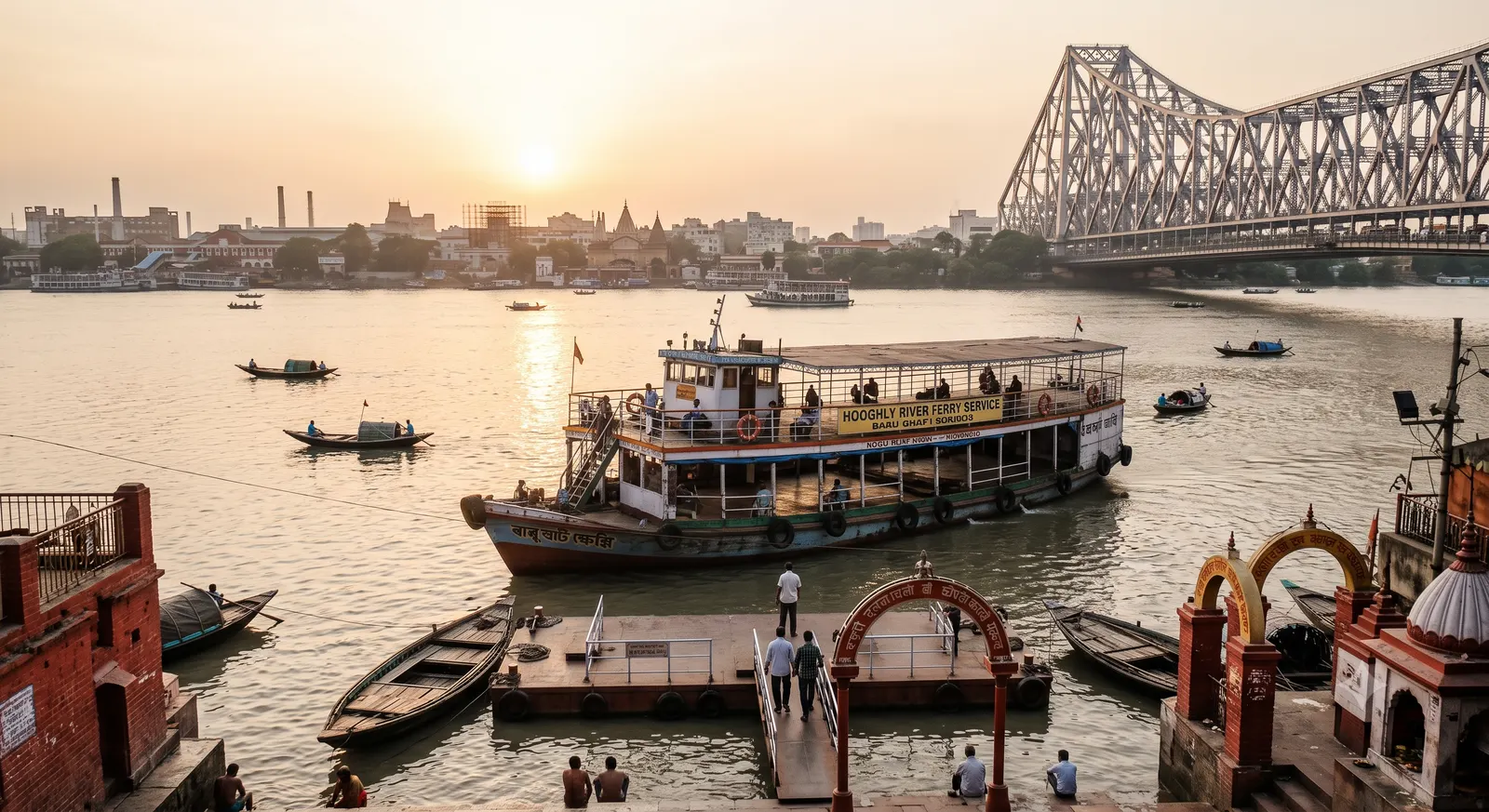
Skip the Howrah Bridge for now. Take the foot ferry (Rs. 5-8) from Babu Ghat to the Howrah side and back. The river view of Kolkata from the water — the bridge, the ghats, the skyline — is the photograph you came for. Morning is best.
Day 1 Evening
4. The Howrah Bridge at sunset (walk it, don’t just photograph it)
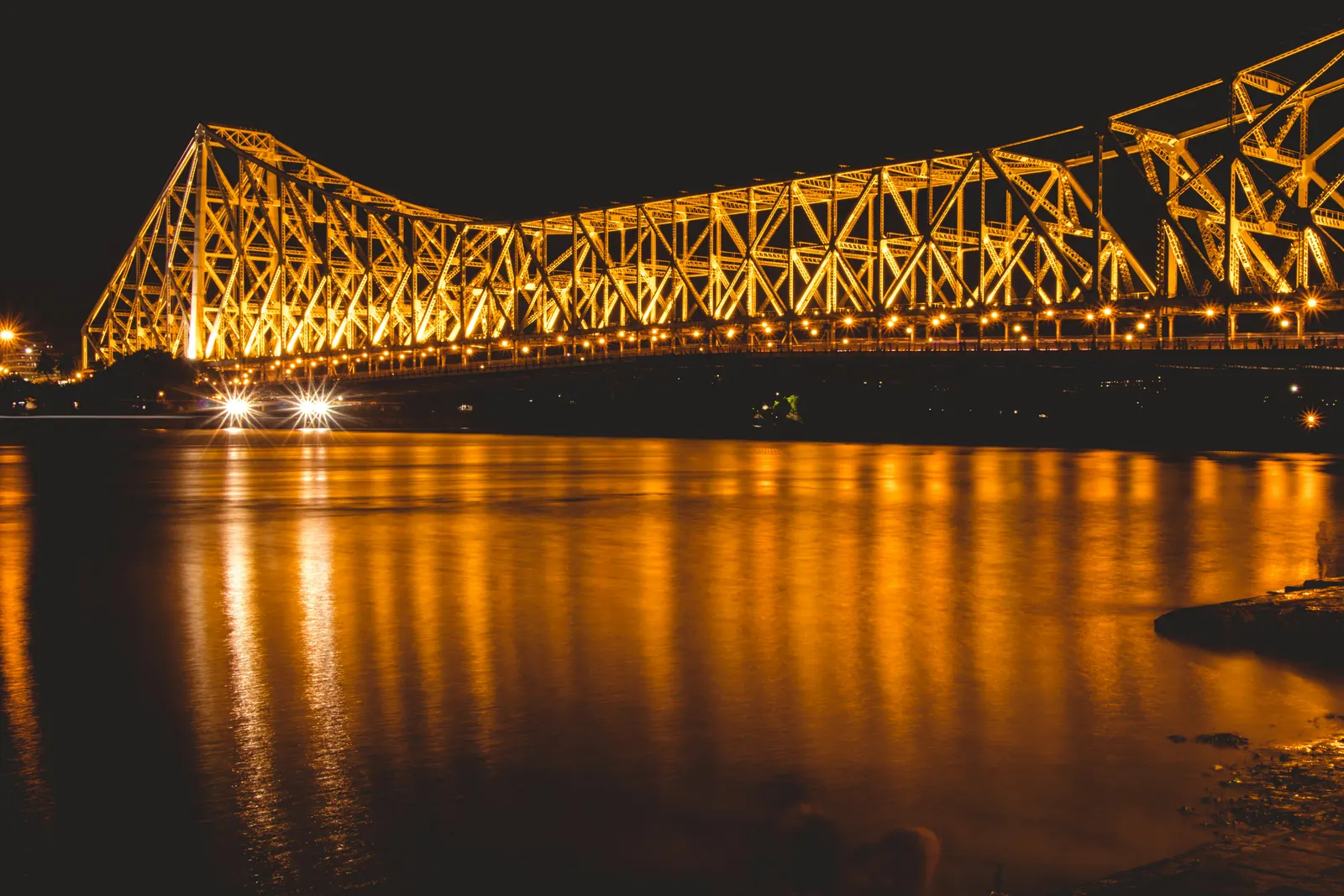
The Howrah Bridge is the second-busiest cantilever bridge in the world and it’s free to walk across. Do it at sunset, east-to-west direction, for the light on the river. Then take the ferry back.
5. Park Street for dinner
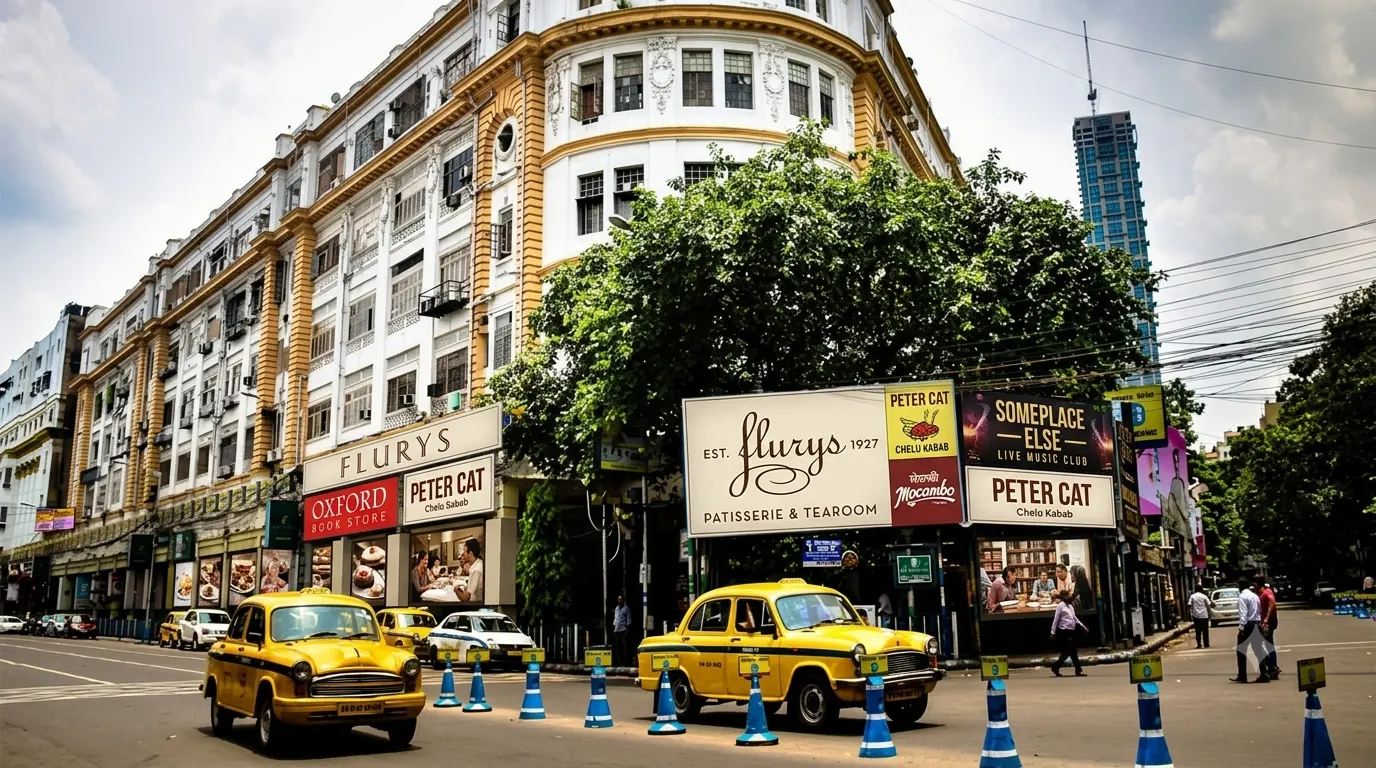
Park Street has been Kolkata’s cosmopolitan eating street since the 1960s. Peter Cat (the chelo kebab is non-negotiable), Flurys for dessert and a look at the 1927 interior. Walk the street before sitting down — the evening energy on Park Street is a Kolkata experience in itself.
Day 2 — Heritage and Food
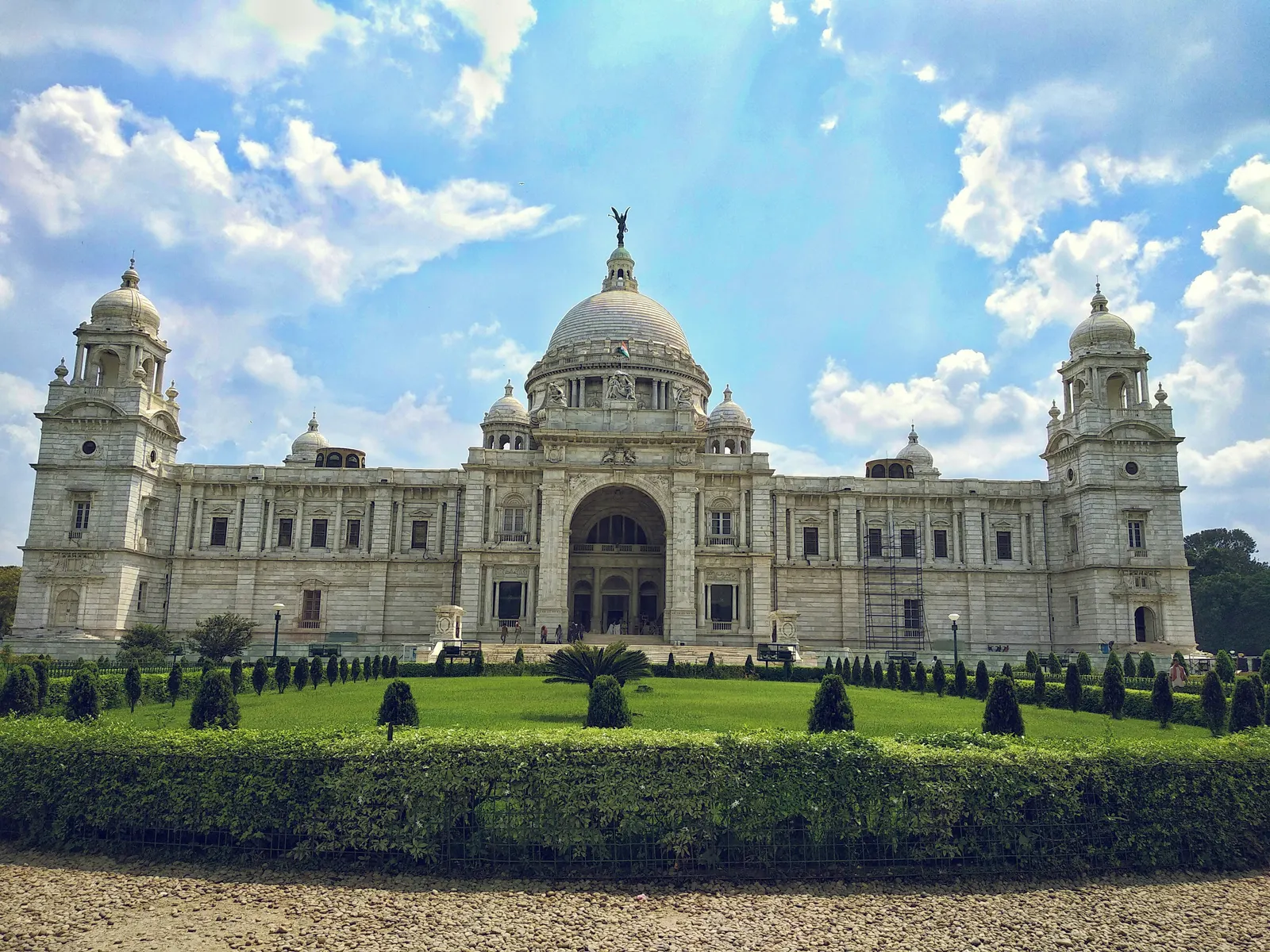
6. Victoria Memorial — first thing in the morning
The Victoria Memorial is extraordinary and it’s best before 9 AM when the crowds are thin and the light on the white marble is at its best. The gardens around it are free to walk — the memorial entry has a separate ticket. The museum inside is actually good — the Raj-era maps, artworks and photographs are worth more time than most visitors give them.
7. Birla Planetarium
One of the largest planetariums in Asia and still one of the best in the country. The shows are in English and Bengali at different times — check the schedule. The building itself, designed in the style of the Sanchi stupa, is worth seeing from outside even if you don’t go in.

8. Breakfast at a heritage sweet shop
Skip the tourist spots. Go straight to a heritage mishti shop — the ones that have been making Bengali sweets the same way for over a century. Order: a rasgolla, a sandesh (plain, not flavoured), and a mishti doi. This is the Bengali breakfast.
KC Das (Esplanade) invented the packaged rasgolla and has been serving Kolkata since 1866. Balaram Mullick & Radharaman Mullick in Bhowanipore is even older — since 1885 — and their sandesh is some of the best in the city. Both are heritage institutions worth a visit on their own.
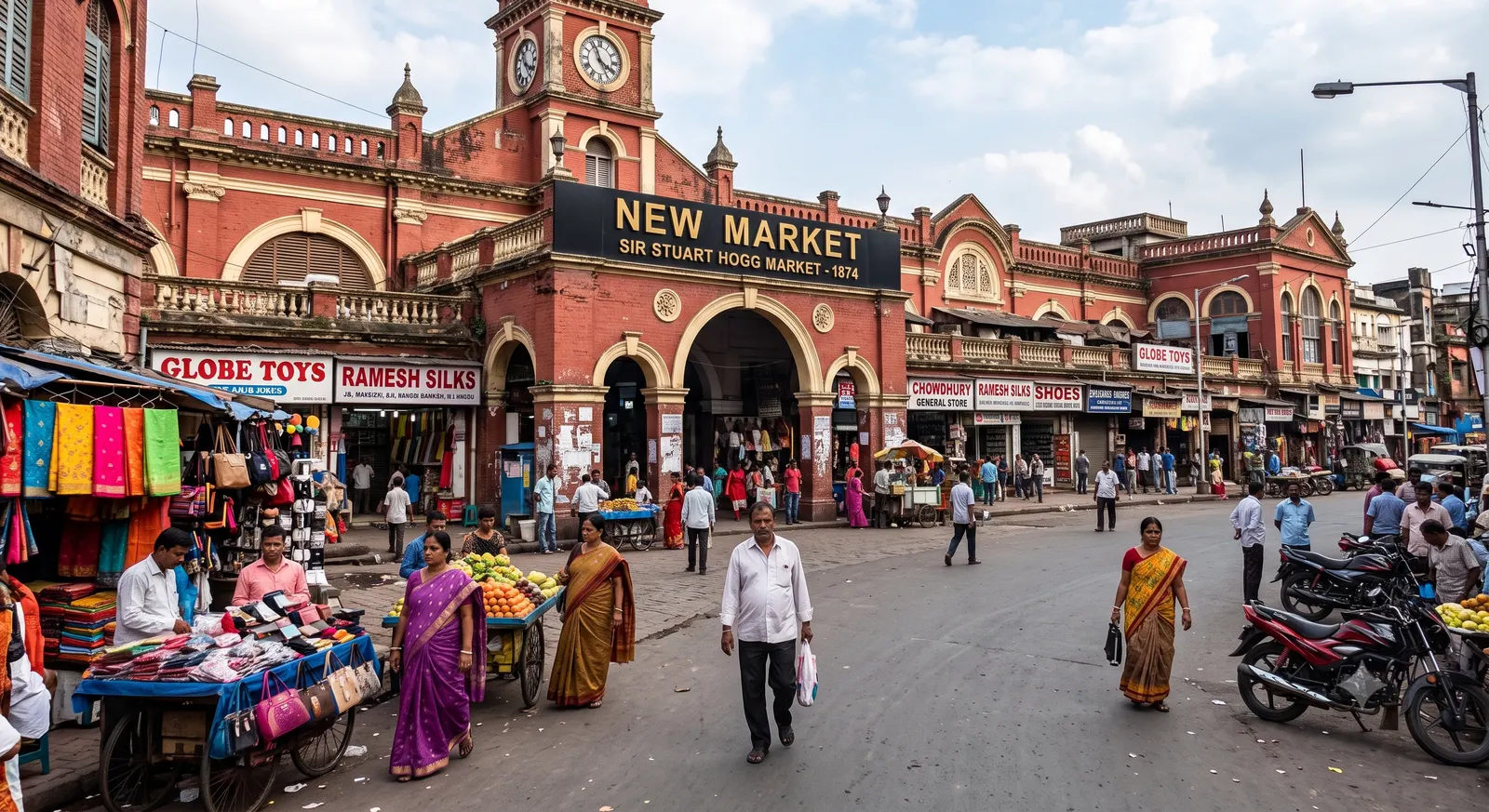
9. The New Market (Hogg Market) experience
New Market is not really for shopping — it’s for the experience of an enormous 19th-century covered market that hasn’t changed much in 150 years. The chicken sellers, the tailors, the perfume stalls, the cheese vendors (yes, cheese) — it’s a full sensory experience. Go mid-morning and follow your nose.
Day 2 Afternoon
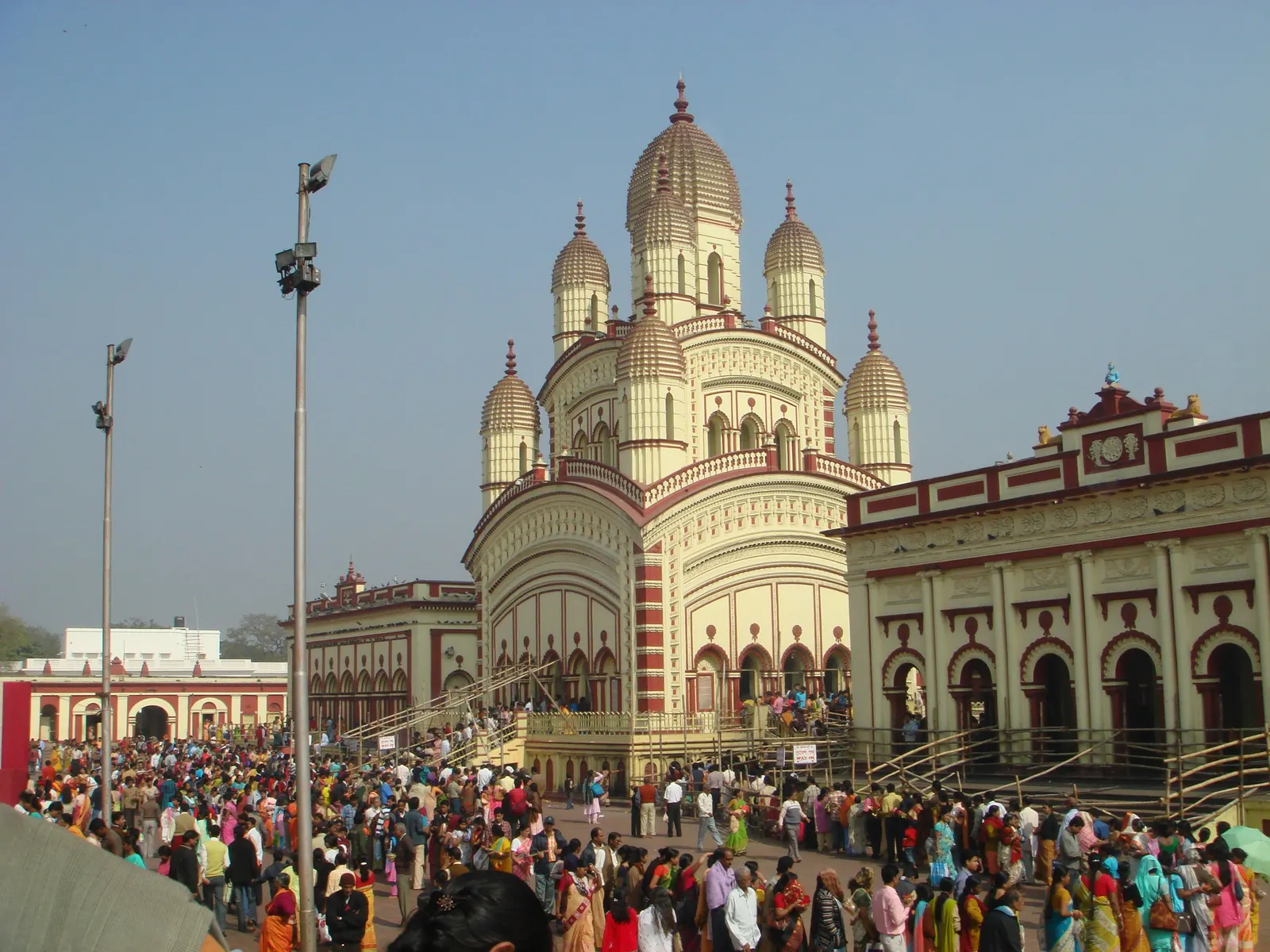
10. Dakshineswar Kali Temple
One of the most sacred temples in West Bengal and far more accessible than most. The 12-towered complex on the banks of the Hooghly is visually stunning, and the riverside ghats here are calm and beautiful. This is also where Ramakrishna Paramahamsa spent much of his life — the room he stayed in is preserved inside the complex. Non-Hindus are welcome throughout.
Take the ferry across the river to visit Belur Math (the Ramakrishna Mission headquarters) — a 10-minute boat ride away and one of the most peaceful places in the city.
11. Maidan — the breathing room
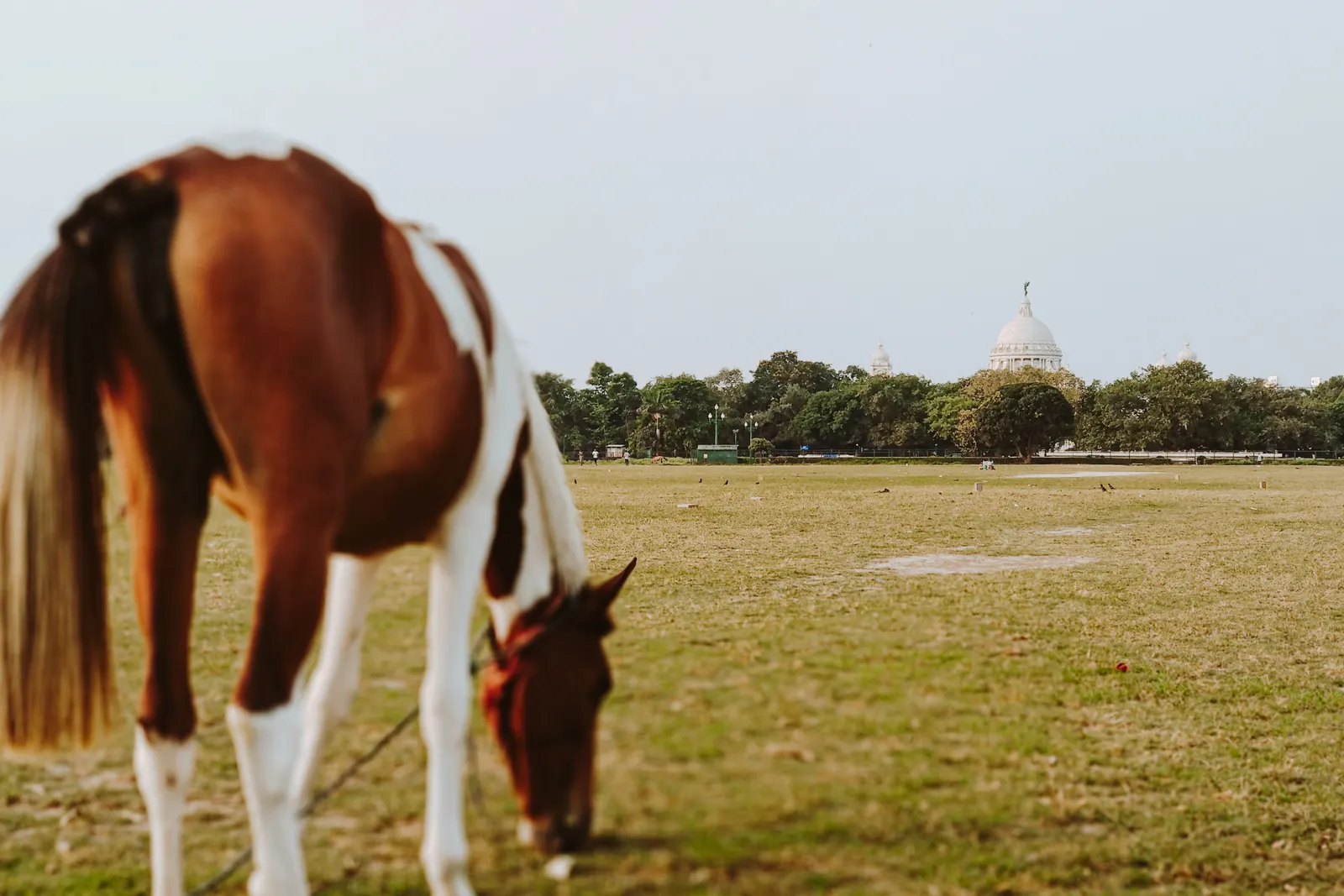
Kolkata’s Maidan is 1,000 acres of open parkland in the middle of the city. In the late afternoon, it hosts: cricket matches on dozens of pitches simultaneously, evening walkers, kite flyers, chai stalls, and the specific atmosphere of a city that has maintained green space at the centre while everything around it densified. Fort William is here but not open to visitors — the exterior and the ramparts from the park side are worth a look.
Day 3 — The Things Most Tourists Miss
12. North Kolkata para walk
Take an auto or cab to Shyambazar crossing and walk south through the North Kolkata paras — Shobhabazar, Jorasanko, Pathuriaghata. The 18th and 19th-century merchant houses (thakurdalan courtyards, cast-iron railings, terracotta decoration) are the architectural heritage of Kolkata that no one talks about enough. Hire a local guide or follow the numbered heritage walk the Kolkata Municipal Corporation has installed on the pavements.
13. Rabindranath Tagore’s house — Jorasanko Thakur Bari
The ancestral home of Rabindranath Tagore is now a museum and it’s one of the better-curated museum experiences in the city. The courtyard, the portraits, the manuscripts — and the understanding that this one family produced the Nobel laureate who defined modern Bengali culture. Worth 2 hours.

14. An adda at any tea stall
Find a glass of chai at any neighbourhood tea stall (tong cha) and just sit for twenty minutes. The tea is Rs. 5-8. The conversations happening around you — at 7 AM or 10 PM, because these stalls are open almost all hours — are the best free entertainment in the city. This is what “adda” means. Kolkata invented it.
15. Biryani at Arsalan, Park Circus
On your last evening, go to Arsalan at Park Circus. Order the mutton biryani. Eat the potato. Understand why Kolkata biryani is different from every other biryani in India. Leave satisfied.
Practical notes for first-timers
Transport: Metro is excellent — clean, cheap, and the fastest way across the city. Auto rickshaws for short distances. Cab apps (Ola/Uber) work. The yellow taxis will negotiate.
Best time to visit: October-March. October-November for Durga Puja and Kali Puja. December for Christmas on Park Street.
What to eat day one: Biryani, kati roll, mishti doi, rasgolla. In that order.
Language: Bengali is the local language — a few words (dhanyabad = thank you, dada/didi for addressing strangers) go a long way. English is widely understood.
What to avoid: The tourist circuit packages sold near Victoria Memorial that promise “heritage walks” and deliver nothing. Walk yourself with a map.
Come curious. Kolkata rewards curiosity more than any other Indian city.
Hero photo: DeepanjanGhosh / Wikimedia Commons / CC BY-SA 4.0 · Birla Planetarium: Ankur P / Wikimedia Commons / CC BY 2.0 · Jorasanko: Kinjal bose 78 / Wikimedia Commons / CC BY-SA 4.0 · Other section photos: Unsplash (free license)